Solid Walnut Cabinet Hardware | Natural Wood Grain Drawer Slides & Handle Sets
Solid Walnut Hardware for Authentic Interiors
The distinction between authentic wood and wood-laminate becomes apparent upon touch. Real walnut offers warmth that transfers through the fingertips, grain variation that catches light differently from every angle, and a surface that ages gracefully rather than wearing thin. For cabinet manufacturers serving premium residential markets, specifying solid Walnut hardware communicates material honesty. It tells the end user that the manufacturer selected real wood not only for cabinet fronts but for every touchpoint—handles, pulls, drawer front profiles, and visible fittings.
However, specifying solid wood hardware introduces challenges not present with laminates or metal finishes. Wood moves with humidity changes. Individual pieces vary in color and grain. Surface durability requires different approaches than metal coating. The Walnut solid wood hardware line addresses these challenges through species selection, drying protocols, stabilization treatments, and finish systems designed specifically for high-touch applications. This guide examines the complete product range, technical specifications, and quality control measures relevant to volume manufacturing.
Why Solid Walnut Rather Than Veneer or Laminate
Each material choice serves different market positions. Laminates offer consistent color and maximum durability at lower cost. Veneers balance natural appearance with dimensional stability. Solid wood provides the deepest aesthetic authenticity and can be refinished if damaged, but requires more careful handling during installation and more explicit care instructions for end users. The Walnut solid wood line targets projects where authenticity justifies these additional considerations—custom homes, boutique hotels, premium office furnishings, and architectural millwork where hardware is specified as a design element rather than an afterthought.
Solid Walnut Drawer Slide Fronts
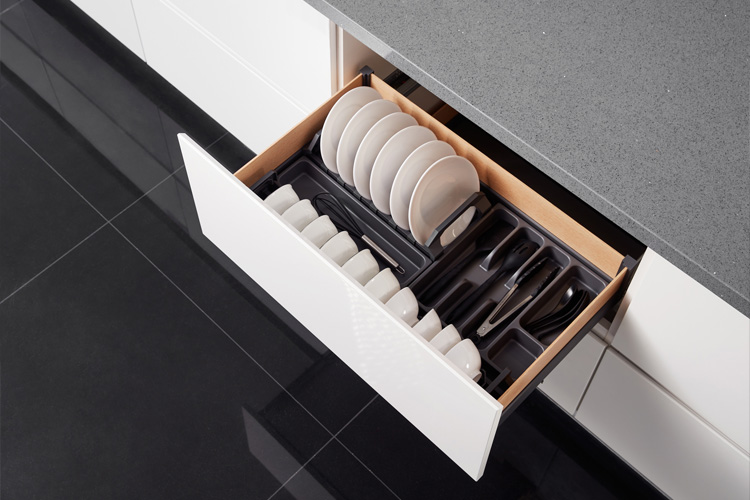
The drawer slide presents an interesting application for solid walnut. Only the front profile—typically 50 to 80 millimeters of visible material—requires the wood finish. The internal mechanism remains steel. The Walnut solid wood drawer slide attaches a milled walnut front piece to a standard heavy-duty slide body, combining natural aesthetics with proven mechanical reliability.
Construction and Attachment Methods
Each solid walnut front piece is CNC-machined from kiln-dried stock to precise dimensions. The rear face includes a relief cut that accommodates the steel slide body. Attachment uses two concealed screws accessed from the slide interior, allowing the wood component to be replaced separately from the mechanical slide. This modular construction serves two purposes. First, if the wood piece is damaged during installation or use, it can be replaced without discarding the entire slide. Second, the same slide body can accept different wood species or laminate fronts, reducing inventory complexity for manufacturers offering multiple finish families. The attachment method also accommodates wood movement—the screw holes are slightly oversized, allowing the walnut piece to expand and contract with humidity changes without warping or cracking.
Wood Selection and Grain Orientation
Only heartwood from Juglans nigra, American black walnut, is used for Walnut solid components. Sapwood, the lighter-colored outer layer, is excluded. Grain runs parallel to the long dimension of the front piece. For wider fronts exceeding 80 millimeters, rift-cut or quarter-sawn stock is used to minimize cupping. Each piece is inspected for knots, checks, and mineral streaks before machining. Acceptable small character marks—pin knots or fine mineral lines—are preserved as authentic indicators of natural material, not rejected as defects. This acceptance standard is documented and shared with buyers so expectations align before production begins.
Solid Walnut Handle and Pull Sets
Handles and pulls represent the highest-touch walnut components. Users grip them daily. Their shape, surface smoothness, and tactile warmth define the hardware experience more than any other element. The Walnut solid wood handle collection offers multiple profiles machined from single pieces of walnut, with no joints or laminations that could fail over time.
Profile Selection and Ergonomic Design
Five core profiles are machined from solid stock. The arch profile features a gentle upward curve that accommodates four fingers comfortably, suitable for heavier drawers. The straight bar profile provides a minimalist grip for lighter applications. The tapered profile narrows at the ends, creating visual lightness while maintaining grip diameter at center. The sculpted profile incorporates a thumb rest on the top surface, designed for frequent daily use. The recessed edge pull routes material from the door edge, maintaining a flush surface while providing a finger grip cavity. Each profile is sanded progressively to 320 grit, producing a smooth surface that feels warm and solid. No filler or grain enhancer is used—the finish seals the natural wood directly.
Length Options and Mounting Specifications
Bar and arch profiles are available in center-to-center lengths of 96, 128, 160, and 192 millimeters. Screw hole drilling is performed after sanding, ensuring precise alignment. Countersinks accommodate standard number 8 wood screws or machine screws with threaded inserts, depending on cabinet door material. For overlay doors, 12 millimeter screw length is standard. For inset doors, 8 millimeter screws are used. Each handle set includes mounting screws matched to the specified door thickness. The recessed edge pull requires a routered pocket on the door edge—dimensions and routing templates are provided with each order.
Solid Walnut Wardrobe Accessories
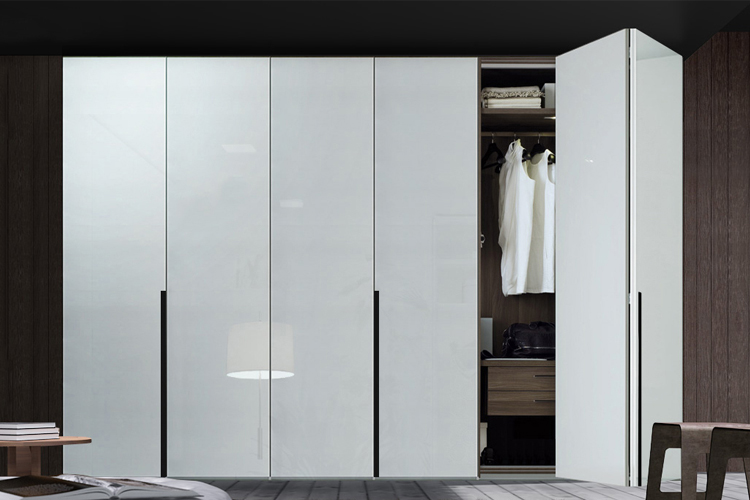
Wardrobe interiors benefit from solid walnut details that turn functional components into design statements. Hooks, hanging rod ends, and valet rod handles in the Walnut collection coordinate with matching drawer fronts and handle sets.
Walnut Hooks and Wall-Mounted Hardware
Single and double hooks are turned from solid walnut stock. The single hook projects 45 millimeters from the mounting surface, suitable for robes or handbags. The double hook projects 35 millimeters with two upward-curving prongs, suitable for multiple lighter items. Each hook includes a concealed mounting plate that attaches to wall or panel surfaces with two screws. The walnut piece then slides onto the plate and secures with a hidden set screw—no exposed fasteners. For wardrobe interiors, this clean mounting maintains the visual simplicity of the space. Matching hook rails in lengths of 300, 450, and 600 millimeters accommodate multiple hooks on a single backplate, suitable for accessory organization systems.
Valet Rods and Hanging Bar End Caps
The valet rod, a pull-out rod for temporarily hanging garments, features a solid walnut handle turned at the end. The handle diameter of 25 millimeters provides comfortable grip while retrieving or returning the rod. The rod mechanism remains concealed within the wardrobe case. For fixed hanging bars, solid walnut end caps finish the cut ends of metal or wood rods. The caps press-fit into standard 32 millimeter and 38 millimeter rod diameters and include a small set screw for security. These small details—visible only when rods are empty—demonstrate attention to material quality throughout the installation.
Solid Walnut Sink Cutting Boards and Accessories
The kitchen sink zone presents the most demanding application for solid walnut. Water exposure, temperature changes, and contact with food require careful material selection and finish specification. The Walnut sink accessories line addresses these demands while delivering the authentic warmth of real wood.
End-Grain and Edge-Grain Cutting Boards
Two construction types serve different use patterns. Edge-grain boards, where the long grain forms the cutting surface, are machined from single walnut planks. They show the familiar straight grain pattern and are suitable for lighter daily use. End-grain boards, assembled from multiple walnut blocks with the fiber ends facing up, provide superior knife-edge retention and self-healing properties. The end-grain cutting surface is more forgiving to knife edges and shows cut marks less obviously. Both board types are finished with a food-safe blend of mineral oil and beeswax. Neither the finish nor the walnut wood itself contains any toxic substances or allergens beyond the natural compounds found in tree nuts. End users with tree nut allergies should be advised—the packaging includes this notification.
Drying Racks and Colander Covers
The walnut drying rack uses a stainless steel frame with removable walnut slats. The slats are removable for cleaning and can be periodically re-oiled to maintain water resistance. When not in use, the rack folds flat for storage. The colander cover, a solid walnut disc with finger grip, fits standard colander bowls and converts them into serving vessels or storage containers. Like the cutting boards, all sink accessories include printed care instructions advising hand washing, no dishwashers, and periodic oil application. Manufacturers including these accessories in kitchen packages should reproduce these care guidelines in their own documentation to ensure end user satisfaction.
Moisture Content and Dimensional Stability
Solid wood moves with humidity. A walnut handle that fits perfectly in a dry factory may bind or loosen in a humid coastal home or dry mountain climate. The Walnut collection addresses movement through careful drying, stabilization, and design accommodation.
Kiln Drying and Stabilization Protocols
All solid walnut components begin with lumber kiln-dried to six to eight percent moisture content at the time of machining. This range is selected as a midpoint between the equilibrium moisture content of air-conditioned interiors, typically six to seven percent, and unconditioned spaces which may reach ten to twelve percent. After machining, components are conditioned for 48 hours at target moisture content before finishing. For projects destined for extreme climates—tropical locations with sustained humidity above 80 percent or desert locations with humidity below 20 percent—the manufacturer can adjust target moisture content by plus or minus two percent upon request. This adjustment reduces dimensional change after installation.
Expansion Gap Design in Assemblies
Where walnut components mount against metal or laminate surfaces, expansion gaps are incorporated into the design. Drawer slide front pieces float in their attachment—screws are tightened fully but the oversized holes allow cross-grain movement. Handle mounting uses standard holes without special provision, as the short cross-grain dimension of handles results in minimal movement. For the recessed edge pull, the routered pocket is cut one millimeter wider than the pull body, allowing seasonal expansion without binding. These accommodations are invisible in final installation but prevent the warping or cracking that occurs when wood movement is constrained.
Finish Systems for High-Touch Applications
The finish on solid walnut hardware must survive daily contact with hands, occasional cleaning agents, and the natural oils from skin. The Walnut collection offers two finish systems for different performance requirements.
Conversion Varnish for Maximum Durability
For applications demanding the highest durability—commercial kitchens, hotel guestrooms, high-traffic retail displays—a catalyzed conversion varnish is used. This finish cross-links chemically during curing, producing a hard film that resists water, alcohol, mild acids, and common cleaning agents. The varnish is applied in three coats with intermediate sanding, achieving a final thickness of 35 to 45 microns. Surface hardness exceeds 2H on the pencil hardness test. The varnish is available in satin, semi-gloss, and matte sheens. The satin option is most common for walnut, preserving the natural appearance while adding durability. The primary trade-off is that film finishes obscure some wood texture and cannot be spot-repaired—damage requires refinishing the entire component.
Hard Wax Oil for Natural Feel
For applications prioritizing natural tactile experience—residential kitchens, studies, premium home theaters—a hard wax oil finish is offered. This penetrating finish contains natural oils and waxes that polymerize within the wood fibers rather than forming a surface film. The resulting surface feels like bare wood, not plastic. Water beads initially but will penetrate if left standing, so spills should be wiped promptly. The wax oil can be spot-repaired by the end user using a refresh oil, included with each order. Surface hardness is lower than conversion varnish, but the natural feel and ease of field repair appeal to buyers who value authenticity over industrial durability. Approximately 30 percent of Walnut collection buyers select the hard wax oil finish.
Quality Control and Batch Consistency
Solid wood varies naturally. No two pieces are identical. The Walnut quality control system accepts this natural variation while ensuring that components within a single project are visually compatible.
Color Sorting and Grain Matching Standards
After finishing, each component is inspected under standardized 5000 Kelvin lighting. Components are sorted into three color categories. Light category includes heartwood with golden-brown tones, minimal dark figure. Medium category includes typical chocolate-brown walnut with moderate grain contrast. Dark category includes pieces with deep purple-brown color and pronounced figure. For any single order, all components are drawn from the same color category. Grain matching for handle sets: pulls for the same cabinet are machined from adjacent pieces of lumber whenever possible, ensuring similar grain orientation and figure. This matching is documented with each shipment.
Inspection Points and Acceptance Criteria
Each component passes through four inspection points. First, before machining, lumber is scanned for unacceptable defects including through-checks, large knots exceeding eight millimeters, and bark pockets. Second, after machining but before sanding, dimensions are verified against drawing tolerances of plus or minus 0.3 millimeters. Third, after sanding, surface quality is checked for tear-out, raised grain, and sanding swirls. Fourth, after finish curing, the final appearance is verified—no runs, sags, or dust nibs. Acceptance rate targets 97 percent for first-pass yield. Rejected components are recycled or repurposed. Buyers may request inspection reports for individual orders.
Testing and Certification Documentation
For international buyers requiring compliance documentation, the Walnut collection maintains testing records and sourcing certifications.
Sustainable Sourcing and Chain of Custody
All solid walnut is sourced from suppliers certified by the Forest Stewardship Council. Chain of custody documentation tracing lumber from forest to finished component is maintained for each production batch. This documentation is available to buyers upon request and may be included with shipments for jurisdictions requiring proof of legal sourcing. Annual audit reports confirm that no wood from threatened or endangered species is used, and that all harvesting complies with local forestry regulations.
Physical and Chemical Testing Summary
Finish testing per ASTM D3023 confirms adhesion. Abrasion resistance per ASTM D4060: conversion varnish passes 300 cycles, hard wax oil passes 100 cycles. Chemical resistance: conversion varnish shows no effect after 60 minutes exposure to 10 percent acetic acid, 10 percent sodium carbonate, or 50 percent ethanol. Hard wax oil shows staining after 30 minutes and requires prompt wiping. These results are documented in the technical datasheet provided with sample orders. For buyers requiring additional testing—such as specific cleaning agents or temperature cycling—custom test protocols can be arranged with extended lead times.
Sample Ordering and Production Qualification
Manufacturers integrating solid walnut hardware for the first time should complete a structured qualification process before committing to production volumes.
Recommended Qualification Steps
- Wood sample request: Submit a request for unfinished and finished wood samples showing the full color range of Walnut. Samples include edge-grain and end-grain cutting board pieces, handle blanks, and drawer slide front offcuts showing the machining quality.
- Limited sample order: Order five to ten units of each target component type. Use these samples for installation trials, finish durability testing with expected cleaning agents, and humidity cycling tests simulating the target market climate.
- Installation documentation review: Request the complete installation guide including screw specifications, torque recommendations, and any special tools required. For recessed edge pulls, request the routing template to verify compatibility with existing production tooling.
- Batch consistency evaluation: For larger projects, request components from two different production weeks to verify that color sorting keeps visible differences within acceptable range.
- Care instruction finalization: Integrate the provided care guidelines into end-user documentation. For kitchen sink accessories, consider whether to include a small bottle of refresh oil with each product.
Ordering Process and Lead Times
Qualified buyers can follow this structured process to procure solid walnut components for production.
From Sample Approval to Production Shipment
- Submit finish and profile selection: Specify target finish type—conversion varnish or hard wax oil—and sheen level. Select handle profiles and lengths. Indicate drawer slide front dimensions. Provide estimated annual volumes.
- Receive formal quotation: The sales team prepares pricing including volume tier discounts. Minimum order quantities vary by component: 100 units for handles and pulls, 50 units for drawer slide fronts, 25 units for wardrobe accessories.
- Approve batch sample: Before full production, a batch sample set of up to five components is produced and shipped for final approval. This sample represents the color category and grain matching that will apply to the full order.
- Production scheduling: Upon sample approval and deposit, production begins. Lead time is 25 to 30 business days for conversion varnish finishes, 20 to 25 business days for hard wax oil. Solid walnut sink accessories require 30 business days due to additional food safety handling procedures.
- Shipment and documentation: Completed order ships with inspection reports, chain of custody documentation, and printed care instructions for end-user distribution. Replacement component ordering for future batches follows the same sample approval process.
Begin your qualification of Solid Walnut hardware today. Submit an inquiry specifying target component types and estimated annual volumes. A technical sales representative will respond within 24 business hours with wood samples, finish swatches, and complete product documentation.