Aluminum Plate for Cabinet Hardware | Lightweight Metal Drawer Slides & Handle Components
Aluminum Plate Hardware Overview
Aluminum occupies a unique position in cabinet hardware manufacturing. It offers the strength and machinability required for structural components while weighing approximately one-third as much as steel. This weight advantage matters in applications where shipping costs, installation ergonomics, or moving elements are considerations. Additionally, aluminum naturally resists corrosion without the need for plated coatings, making it suitable for kitchens, laundry rooms, marine cabinetry, and any environment with elevated humidity or occasional moisture exposure.
The Aluminum Plate product line encompasses flat and formed components machined from 5052, 6061, and 6063 alloy plate stock. These components serve as structural elements within drawer slides, handle and pull bases, hinge mounting plates, and wardrobe system brackets. Unlike steel equivalents, aluminum components can be anodized in multiple colors, powder-coated to match surrounding finishes, or left in mill finish for a technical, industrial aesthetic. This guide examines the alloy options, surface treatments, mechanical specifications, and quality control standards relevant to volume manufacturing.
Applications for Aluminum Plate in Cabinet Hardware
Component engineers specify Aluminum Plate for several distinct use cases. In drawer slides, aluminum profiles reduce moving mass, allowing smoother operation and lower wear on soft-close mechanisms. In handles and pulls, aluminum bases provide structural reinforcement for wood or acrylic top pieces while keeping overall weight manageable for larger pulls. In marine and outdoor kitchen applications, aluminum’s corrosion resistance eliminates the rust concerns associated with steel hardware. In high-rise residential construction, the weight reduction across thousands of units reduces building material logistics costs. Each application leverages aluminum’s specific property advantages.
Aluminum Plate Drawer Slide Components
Drawer slides traditionally use cold-rolled steel for the load-bearing members. The Aluminum Plate alternative replaces the outer channel and inner slide members with formed aluminum profiles while retaining steel ball bearings and hardened steel wear surfaces at contact points. This hybrid construction maintains load capacity while reducing overall slide weight.
Alloy Selection for Slide Profiles
Three aluminum alloys serve different slide applications. 5052 alloy offers excellent formability and weldability, used for the outer channel where the profile is roll-formed into shape. Its magnesium content provides good corrosion resistance without heat treatment. 6061 alloy, heat-treated to T6 temper, provides higher strength for heavy-duty slides supporting loads up to 60 kilograms. 6063 alloy, also heat-treated, provides the best surface finish for anodizing, specified when the slide will remain visible in open applications such as under-mount drawer systems. The alloy selection is documented on each component drawing, allowing buyers to match mechanical requirements with aesthetic needs.
Weight Reduction and Operational Benefits
A typical steel drawer slide for a 500 millimeter extension weighs approximately 1.2 kilograms per pair. The equivalent Aluminum Plate slide weighs 0.8 kilograms per pair—a 33 percent reduction. This reduction affects shipping container loads, installer fatigue during multi-unit installations, and the force required to extend the drawer. Lower moving mass also reduces wear on soft-close mechanisms, extending service life. Cycle testing to 50,000 operations shows no measurable increase in extension force or reduction in damping performance compared to steel slides when aluminum is used for the non-wearing structural members.
Aluminum Plate Handle and Pull Bases
Long handles exceeding 300 millimeters in length benefit from aluminum bases. The metal provides structural rigidity while the visible surface can be wood, acrylic, leather, or other materials. The Aluminum Plate handle base system separates structural and aesthetic functions.
Base Plate Design and Machining Specifications
Each aluminum handle base begins as 5052 or 6061 plate in thicknesses of 3, 5, or 8 millimeters. CNC machining creates mounting holes, standoff posts for attaching the decorative top piece, and any required lightening pockets to reduce weight further. The base includes threaded inserts at standard handle lengths—96, 128, 160, 192, and 224 millimeter center-to-center spacing. These inserts accept the mounting screws that attach the handle to the cabinet door or drawer front. The decorative top piece—walnut, white oak, acrylic, or leather—attaches to the standoff posts using small screws from the rear of the aluminum base, invisible in final installation. This modular approach allows a single aluminum base to support multiple decorative top options, reducing inventory complexity.
Surface Preparation for Bonding and Coating
Where decorative top pieces bond directly to the aluminum base rather than using mechanical attachment, the aluminum surface receives a chemical pretreatment. This pretreatment, typically a chromate-free conversion coating, creates a receptive surface for structural adhesives. Bond strength testing per ASTM D1002 shows shear strength exceeding 15 megapascals for properly prepared surfaces. For aluminum bases that will remain visible as the finished handle—the industrial look—the plate receives either anodized or powder-coated finish matching the surrounding hardware scheme. Anodized finishes in clear, bronze, or black are most common for visible aluminum handles.
Aluminum Hinge Mounting Plates
Concealed cabinet hinges require mounting plates attached to the cabinet side wall. Steel plates are standard, but aluminum plates offer weight savings and corrosion resistance in humid environments. The Aluminum Plate hinge plate line provides direct replacements for standard steel plates using identical hole patterns and cam adjustment mechanisms.
Cross-Compatible Dimensions and Adjustments
All Aluminum Plate hinge mounting plates conform to the European standard 32 millimeter system hole spacing. The plate thickness of 3 millimeters matches steel plate dimensions, ensuring consistent overlay and reveal when used with standard hinge bodies. The cam adjustment mechanism—a zinc-plated steel insert pressed into the aluminum plate—provides plus or minus 3 millimeters of lateral and vertical adjustment. The aluminum base reduces plate weight by 60 percent compared to steel, a difference noticeable when packing multiple hinges for a full kitchen installation. Marine-grade plates receive additional anodizing and are specified with stainless steel cam inserts rather than zinc-plated steel.
Corrosion Testing for Humid Environments
Testing per ASTM B117 salt spray confirms the corrosion resistance of Aluminum Plate hinge plates. Standard mill finish plates pass 200 hours with no surface pitting or white rust. Anodized plates pass 500 hours. For comparison, zinc-plated steel plates typically show red rust at 100 hours. This performance advantage makes aluminum plates the specified choice for coastal installations, indoor pools, laundry rooms, and any kitchen without forced air ventilation during high-humidity cooking. Documentation of salt spray test results is included with each shipment for marine and coastal projects requiring material verification.
Aluminum Plate Wardrobe System Components
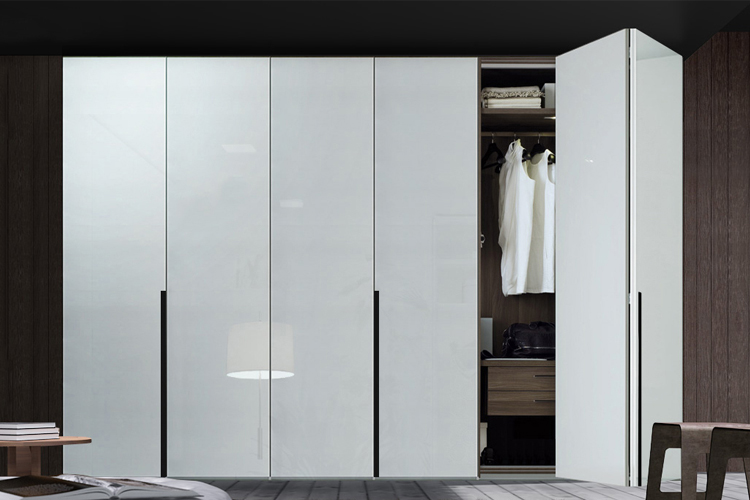
Wardrobe systems benefit particularly from aluminum components because the structures are often shipped flat and assembled on-site. Lightweight aluminum reduces shipping weight and eases installer handling. The Aluminum Plate wardrobe line includes shelf brackets, hanging rod supports, and divider plates.
Shelf Brackets and Standards
Aluminum shelf brackets are machined from 8 millimeter 5052 plate, then formed to create the L-shape support. The bracket includes a keyhole mounting slot that engages with a steel standard or aluminum rail. Load testing to 60 kilograms per bracket shows no permanent deflection. For open wardrobe systems where brackets remain visible, the aluminum receives a brushed anodized finish. For systems where brackets conceal within side panels, the mill finish is sufficient. The bracket design incorporates a small anti-tip tab that engages with the shelf underside, preventing the shelf from lifting off the bracket when contents are removed from one side.
Hanging Rod Supports and Divider Plates
The hanging rod support bracket attaches to wardrobe side panels and accepts standard 32 millimeter diameter rods. The aluminum plate bracket is machined from 6 millimeter 6061 plate, heat-treated to T6 temper for strength. A nylon insert within the rod socket prevents metal-to-metal contact and dampens vibration. Divider plates—vertical panels that separate hanging sections from shelving sections—use 3 millimeter 5052 plate with formed flanges for rigidity. The divider plates include pre-drilled holes for shelf bracket engagement, allowing flexible reconfiguration of the wardrobe interior. All components share the same anodized or powder-coated finish for visual consistency.
Aluminum Surface Finish Options
The visible finish on aluminum hardware significantly affects both appearance and durability. The Aluminum Plate line offers multiple finish tracks for different market positions and environmental requirements.
Mill Finish and Mechanical Finishes
Mill finish is the baseline—aluminum as it exits the machining process with no additional treatment. The surface shows machining marks and a uniform light gray color. Mill finish is suitable for concealed components or technical, industrial aesthetics where raw material appearance is valued. For improved appearance without added coating, mechanical finishes are available. Brushed finish uses abrasive belts to create a unidirectional grain pattern. Satin finish uses finer abrasives for a smoother, non-directional surface. Bright dip involves chemical polishing before mechanical finishing, producing a highly reflective surface similar to chrome but without electroplating. Mechanical finishes require clear anodizing to protect the bright surface from oxidation and fingerprints.
Anodized and Powder-Coated Finishes
Anodizing converts the aluminum surface to aluminum oxide, a transparent, hard ceramic layer. Clear anodizing preserves the natural aluminum appearance while adding surface hardness and corrosion resistance. Color anodizing deposits dye within the porous oxide layer before sealing, producing colors including gold, bronze, black, and red. Anodized finishes are durable, UV-resistant, and do not chip or peel because the color is within the metal surface rather than a coating. Powder coating applies a colored polymer layer to the aluminum surface. Powder coating offers unlimited color options including custom matches to specific brand colors. The coating thickness of 60 to 80 microns provides excellent scratch resistance and can be touched up in the field if damaged. Both finish types pass 500 hours salt spray testing.
Aluminum Alloy Specifications and Properties
Buyers selecting Aluminum Plate components should understand the property differences between available alloys. The choice affects strength, formability, corrosion resistance, and surface finish quality.
Alloy 5052 Properties and Applications
5052 is a non-heat-treatable alloy strengthened by magnesium. Its key advantage is formability—it bends, stamps, and rolls without cracking. For this reason, 5052 is specified for drawer slide profiles, formed shelf brackets, and any component requiring significant shaping after machining. Typical yield strength is 193 megapascals in the H32 temper. Corrosion resistance is excellent, including resistance to saltwater, making 5052 suitable for marine and coastal applications. Weldability is good, though welding is rarely required for hardware components. Surface takes anodized finishes well, though the finish may show some grain structure variation.
Alloy 6061 and 6063 Properties
6061 is heat-treatable and offers higher strength than 5052. Yield strength reaches 276 megapascals in the T6 temper. 6061 is specified for components requiring maximum load capacity—heavy-duty hinge plates, high-load drawer slides, and structural brackets. The alloy machines well but does not form as readily as 5052—bending requires larger radii to avoid cracking. 6063 is also heat-treatable but formulated for surface finish quality. Yield strength is lower than 6061 at 214 megapascals, but 6063 anodizes to a clearer, more consistent finish. Specify 6063 when the component will be visible and requires premium anodized appearance—visible handle bases, exposed hinge plates, and decorative trim.
Machining Tolerances and Quality Control
Precision machining ensures that Aluminum Plate components fit correctly with mating parts. The quality control system maintains documented tolerances verified through inspection.
Standard Tolerances for Plate Components
Linear dimensions up to 100 millimeters are held to plus or minus 0.1 millimeters. Dimensions from 100 to 300 millimeters are held to plus or minus 0.15 millimeters. Dimensions exceeding 300 millimeters are held to plus or minus 0.2 millimeters. Hole diameters are held to plus or minus 0.05 millimeters. Hole positions relative to part edges are held to plus or minus 0.1 millimeters. Flatness across the plate surface is held to 0.1 millimeters per 100 millimeters of length. These tolerances match or exceed the requirements for hinge mounting plates and handle bases, ensuring interchangeability with steel components.
Inspection Methods and Documentation
Each production batch undergoes first-article inspection where the first component off each machine is measured completely. Subsequently, attribute sampling per ANSI/ASQ Z1.4 at inspection level II, acceptable quality level 1.0, verifies ongoing quality. Measurement tools include digital calipers, micrometers, height gauges, and coordinate measuring machines for complex parts. Inspection reports are available upon request and included with shipments for customers specifying the documentation option. For critical applications—aerospace, medical, or safety-related—full 100 percent inspection of selected dimensions can be arranged with extended lead times.
Corrosion Resistance and Environmental Performance
Aluminum’s natural corrosion resistance derives from its oxide layer. However, the specific environment determines whether additional protection is required. The Aluminum Plate selection guide helps buyers match finish to exposure conditions.
Environmental Exposure Classifications
Interior dry environment—air-conditioned spaces, offices, bedrooms—requires no additional protection beyond mill finish or basic anodizing. The natural oxide layer prevents visible corrosion indefinitely. Interior humid environment—kitchens, bathrooms, laundry rooms—benefits from anodized or powder-coated finishes, particularly on components near water sources. Coastal indoor environment—homes within one kilometer of saltwater—requires anodized finishes of 15 microns minimum thickness or powder coating, plus stainless steel hardware for any fasteners contacting the aluminum. Outdoor covered environment—porches, outdoor kitchens under roof—requires powder coating or anodizing plus design features that prevent water pooling. Outdoor exposed environment requires powder coating with pretreatment and periodic maintenance inspection.
Galvanic Compatibility with Other Metals
When aluminum contacts other metals in the presence of an electrolyte such as water, galvanic corrosion can occur. The Aluminum Plate components are designed to avoid direct contact with dissimilar metals where possible. Steel bearings in aluminum drawer slides are separated by the grease film within the bearing race, which prevents electrical continuity. Fasteners attaching aluminum handles to wood or composite doors do not contact dissimilar metals. Where aluminum hinge plates mount against steel cabinet sides, a thin nylon or mylar insulator separates the metals. For applications where direct contact cannot be avoided, specify anodized aluminum and zinc-plated or stainless steel fasteners with dielectric grease applied at assembly.
Sample Ordering and Production Qualification
Manufacturers integrating aluminum plate components for the first time should complete a structured qualification process focusing on mechanical fit and finish durability.
Recommended Qualification Steps
- Material and finish sample request: Submit a request for alloy sample plaques showing mill finish, brushed anodized, and powder-coated surfaces. Samples of 5052, 6061, and 6063 in representative thicknesses allow in-house testing of machinability if secondary operations are planned.
- Mechanical sample order: Order 10 to 25 units of each target component type. For drawer slide components, assemble into complete slides and test extension force, side play, and cycle life. For handle bases, verify mounting hole alignment with existing door drilling patterns. For hinge plates, test adjustment range and holding torque.
- Corrosion validation testing: If the target application involves humidity or moisture exposure, perform in-house salt spray or humidity cabinet testing on sample components. While mill and anodized samples pass standard tests, specific cleaning agents used in the destination market may affect finishes.
- Assembly process integration: Verify that existing assembly tooling—screwdrivers, presses, fixtures—works with aluminum components. Aluminum’s lower hardness may require different torque settings than steel to avoid stripping threads.
- Weight documentation for logistics: For large projects where shipping weight affects costs, calculate total weight savings using aluminum versus steel. Document this saving for logistics planning.
Ordering Process and Technical Support
Qualified buyers can follow this structured process to procure aluminum plate components for production.
From Specification to Production Shipment
- Submit component drawings or reference numbers: Provide engineering drawings, sample components, or reference existing product numbers. The technical team responds within 24 business hours with alloy recommendations, finish options, and preliminary pricing.
- Review finish selection guide: Based on the target installation environment—interior dry, interior humid, coastal, or outdoor—select appropriate alloy and finish. The technical team provides a written recommendation with rationales.
- Approve first-article samples: Before full production, machined and finished samples are produced and shipped. Up to five components per part number are provided for final approval.
- Production scheduling: Upon sample approval and deposit, production begins. Lead time is 15 to 20 business days for mill finish components, 20 to 25 business days for anodized finishes, and 25 to 30 business days for powder-coated finishes.
- Shipment and certification: Completed order ships with material certifications, inspection reports if requested, and finish test summaries. Replacement components for future batches follow the same first-article approval process for any alloy or finish changes.
Begin your evaluation of Aluminum Plate components today. Submit an inquiry specifying target part types, estimated annual volumes, and installation environment. A technical sales representative will respond within 24 business hours with alloy samples, finish swatches, and complete product documentation.